SAT in Ghana: What is it? How can I take the test? How
can I excel?
As a former test participant myself, the SAT (Scholastic Aptitude Test) is nothing intimidating to dampen your spirits. It is only a stepping stone to future greatness, and like each step you take can be deterministic or can be a misstep, the way you approach the SAT is the major determinant of whether or not you lay a solid foundation for yourself for your college application journey.
In case you do not already know what the SAT is used for, a simple explanation is that it is a standardized test used by numerous colleges abroad as one of the criteria in determining whether a student is a good enough fit for that specific college in question.
The majority, not all, of colleges abroad require you have an outstanding SAT score, while others do not require SAT results to be submitted in the first place. A few colleges and their SAT score cut-off points:
School Names
SAT 25th %ile Scores
SAT 75th %ile scores
EBRW
Math
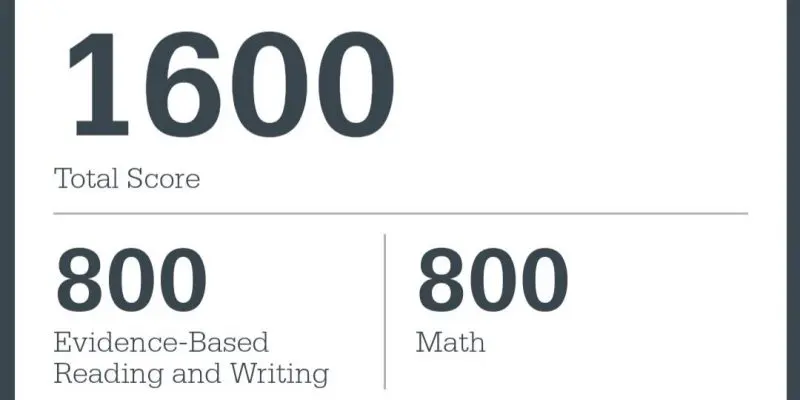
TOTAL
EBRW
Math
TOTAL
MIT
730
780
1510
780
800
1580
UChicago
730
770
1500
770
800
1570
Yale
720
740
1460
770
790
1560
Harvard
710
750
1460
770
800
1570
Princeton
710
740
1450
800
800
1600
Stanford
700
740
1440
770
800
1570
Columbia
710
740
1450
760
800
1550
UPenn
700
740
1440
760
800
1560
Dartmouth
710
730
1440
770
790
1560
Brown
700
720
1420
760
790
1550
Cornell
680
720
1400
760
800
1560
Average
709
743
1451
770
797
1566
Score data is taken from College Board; section scores may not add up to the total score.
With this in mind, how do we make sure we actually score well enough to be considered for admission to these colleges? First, Let’s look at what the SAT comprises of, the parts of the SAT:
The SAT consists of two main parts. English Language and Mathematics, or more specifically Writing and Reading, and Mathematics. 1.1) Reading
52 multiple–choice questions
65 minutes
Passages or pairs of passages (literature, historical documents, social sciences, and natural sciences)
1.2) Writing & Language
44 multiple–choice questions
35 minutes
Grammar, vocabulary in context, and editing skills
2) Math
58 multiple-choice questions (broken up into a 20-question No-Calculator section and a 38-question Calculator-allowed section)
80 minutes (25 minutes for the No-Calculator section; 55 minutes for the Calculator-allowed section)
Algebra I and II, geometry, and some trigonometry
3) Optional, but not optional Essay
The essay is ordinarily an optional portion of the SAT, but the majority of schools, especially the Ivy Leagues, require college applicants to write the optional essay.
Now, we will explore how we can ensure we increase our chances of scoring higher on the SAT, and how we can, ultimately, pass the SAT.
Read section directions before the test. Study and review the directions for each SAT section before the test. Use your test time for the test not for reading directions.
Answer the questions you know first. As you go through each section, answer all of the questions you know the answers to first. Mark all the questions you don’t immediately know the answer to and return and answer them later.
Eliminate incorrect answers. If you’re able to eliminate even one choice for the selection of possible answers then guess. Sometimes it’s easier to eliminate answers you know to be incorrect than to identify the correct answer. Eliminating all the incorrect answers often leads to the correct answer.
Be neat. Don’t be sloppy when filling in the answer grid for student-produced response questions.
Use your test booklet. Since you’re allowed to write in the test book, cross out answers you know are wrong and do scratch work.
Avoid stray marks. Since a machine scores your test, make sure not to put any stray marks on your answer sheet. SAT scoring machines frequently can’t differentiate between a correct answer and an accidental stray mark.
Your first response is usually correct. Your first response to a question is usually correct. Don’t change an answer unless you’re certain you’ve made an error.
There is only one correct answer. Only select one answer for each question — as there is only one correct answer. Sometimes it may seem there is more than one answer. Select the best answer for each question.
Don’t skip answers–guess. On older versions of the SAT, you were penalized for guessing. But not anymore. If you don’t have any idea what the answer is then guess. You’re aren’t penalized for guessing. However, before guessing, always try and eliminate at least one incorrect answer choice.
Pay attention. Make sure you’re placing your answers in the correct number space and section on your answer sheet. It’s easy to place your answer in the wrong place if you’re not paying close attention.
Budget your time. Pace yourself! This test is timed. Only spend a few moments on the easy questions and no more than a minute or two on the harder questions. Don’t forget that the SAT consists of several small, timed, tests. It’s easy to lose track of time so make sure to pay attention to how much time is allotted for each test and how much time is remaining as you proceed through each section. Pacing yourself requires practice so practice, practice, practice.
Easy questions first. A rule of thumb is that easy questions on the SAT typically precede harder questions.
Make sure you understand the question. Make sure that you fully understand each question before you answer it. If you’ve taken a lot of practice tests you’ll be tempted to answer questions you recall from practice tests. Make sure to answer the questions being asked and not those from practice tests.
Bring a watch or timer. Don’t forget to bring your own stopwatch to the testing center. There isn’t always an accurate clock at the testing center.
Know what to expect on the test. You need to know the types of questions to expect on the SAT. There 52 Reading questions (65 minutes), 44 Writing & Language questions (35 minutes), 58 Math questions (80 minutes), and one Essay (50 minutes).